
A recovery mentor has walked the road just ahead of you, and we help you find your way to the sober living and support where those relationships form.
A recovery mentor is someone further along in their own recovery who guides a person newer to it, drawing on lived experience rather than professional training. Mentorship is broader than working a program and longer lasting than a single goal, a steady relationship that helps someone rebuild a whole life. Hopeful Estates does not run a mentorship program. We help you find your way to sober living and recovery support, where mentor relationships form naturally among people in recovery.
Having someone ahead of you who understands makes the road easier. Call us at 201 292 0185 or reach out through our contact page, and we will help you find your way to the support you need to move forward.
A recovery mentor guides, encourages, and holds a person accountable through the long work of rebuilding a life after addiction. The role reaches past staying sober into the practical business of living: finding work, repairing relationships, rebuilding trust, and growing the self esteem that addiction often erodes. Because a mentor has lived through recovery themselves, the guidance comes with a kind of understanding that advice from someone who has not been there rarely carries.
What sets mentorship apart is its breadth and its steadiness. A mentor is not tied to a single program or a fixed set of sessions. The relationship grows over time and adapts to whatever a person is facing, a hard week, a job interview, a strained family conversation. That trust matters, because addiction often damages a person’s ability to rely on anyone, and rebuilding it with someone safe is part of how recovery takes hold.
A recovery mentor is set apart by breadth and length: a broad, ongoing relationship rather than a program or a fixed set of sessions. The quick comparison below shows where a mentor sits.
| Role | What Makes It Distinct |
|---|---|
| Recovery mentor | A broad, open ended relationship covering the whole of rebuilding a life |
| Sponsor | Focused on the twelve steps of a specific fellowship like AA or NA |
| Recovery coach | Focused on defined goals, often for a set season of recovery |
The difference that matters most is scope. A sponsor is tied to a program, a coach to a set of goals, while a mentor stays alongside across the whole of recovery. For a fuller side by side of coaching, therapy, and sponsorship, see our recovery coaching page. Many people lean on more than one of these at once, since each does something different.
One of the most distinctive things about mentorship is that it comes full circle. The person being mentored today often becomes a mentor tomorrow, and helping someone else through early recovery turns out to strengthen the helper’s own sobriety. Giving back is not a favor owed. It is one of the ways recovery deepens and lasts.
This is part of what makes a recovery community so powerful. In a setting where people are at different stages, those further along naturally guide those just starting, and everyone gains from the exchange. The newcomer gets a role model who has been there, and the mentor renews their own commitment by putting it into practice. That mutual lift is hard to manufacture and easy to find in the right environment.



A good mentor relationship rests on trust, honesty, and a genuine fit between two people, so it is worth knowing what to look for. The strongest mentors have solid, steady recovery of their own, enough time and stability that they can guide without being pulled off course. They are honest, willing to say the hard thing rather than only the comfortable one, since that honesty is where accountability comes from.
Fit matters as much as credentials. A mentor relationship works when a person feels able to speak freely, without fear of judgment, and when the mentor’s personality is strong enough to hold them to what they said they wanted. It also helps when a mentor understands the wider recovery world, meetings, resources, and the practical steps of rebuilding a life, so they can point the way as well as walk alongside. None of this has to be formal. Many of the best mentor relationships begin simply, through shared time in a recovery community, and grow from there.
Mentorship grows best where people in recovery live and spend time together, which is exactly what a sober living home provides. Mentors are rarely assigned. They emerge, through recovery communities, alumni networks, and mutual aid groups such as AA and NA, and most of all through daily life alongside others in recovery. A sober living home puts a person in the middle of that, surrounded by people at different stages who can guide and be guided.
A good sober living home brings many kinds of support together, which is why it is such fertile ground for the relationships that carry recovery forward.
We help you find your way to the support that helps recovery last. Hopeful Estates helps people across New Jersey find sober living and recovery support where mentorship and community are part of daily life. We do not run programs, match mentors, or operate homes ourselves. What we do is listen to your situation and connect you with the sober living and support that fit where you are, so you can keep building a better life. Reach out and tell us where you are, and we will help you take the next step. You can learn more on our sober living homes page.
The right people around you can change the whole shape of recovery. Tell us where you are and we will help you find your way to sober living and support where mentorship and community come naturally, so you can build the life you want. Call us at 201 292 0185 or send a confidential message, and we will start today.
A recovery mentor is someone further along in recovery who guides a person newer to it, based on lived experience. The role is broad and ongoing, helping with work, relationships, trust, and long term growth, not just staying sober.
A sponsor guides someone through the twelve steps of a specific fellowship such as AA or NA, while a mentor offers broader, ongoing guidance across the whole of rebuilding a life. A sponsor is tied to a program, a mentor is not.
A recovery coach works with you toward defined goals, often for a set season, while a mentor is a longer, more open ended relationship built on being a step ahead. Many people have both at different points.
Mentors usually emerge from recovery communities rather than being assigned, through mutual aid groups, alumni networks, and daily life in a sober setting. Living somewhere surrounded by others in recovery makes those connections far more likely.
A mentor adds accountability, guidance, and a trusted person who has been where you are, which many people find steadies their recovery. The relationship also helps rebuild the trust that addiction often damages.
We help you find your way to the sober living and recovery support where mentorship happens naturally. We do not match mentors ourselves, but we connect you with the support and community that help recovery last.
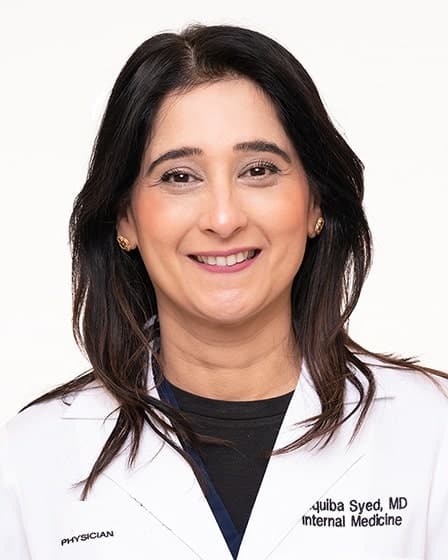
Dr. Saquiba Syed is a board certified internal medicine physician based in Jersey City, New Jersey, affiliated with Jersey City Medical Center and other hospitals in the area. She earned her medical degree from King Edward Medical University and has more than 20 years of clinical experience in primary and hospital care. Dr. Syed reviews this page for medical accuracy.