
Learn how to verify a sober living home in New Jersey. Check the Class F license, spot patient brokering and other red flags, and report bad homes to the DCA.

A legitimate sober living home in New Jersey holds a Class F license from the Department of Community Affairs, or it operates as a chartered Oxford House. The DCA publishes a list of every licensed home in the state, so you can check a house before you sign anything or pay a deposit. If a home is not on that list and is not a verified Oxford House, treat it as unlicensed and walk away.
People in recovery forums put it bluntly. They call some sober homes an insurance scam, and they trade stories about being kicked out on day 20 of a paid 30 so the operator could fill the bed twice. That distrust is not paranoia. In February 2024, the New Jersey State Commission of Investigation published a report titled The Dirty Business Behind Getting Clean, the result of a years long probe that found fraud and unethical conduct at every stage of the recovery process, including sober homes with hidden financial ties to treatment centers.
The good news is that New Jersey gives you something most states do not: a mandatory state license specifically for sober living homes, a public list of who holds one, and a public record of serious violations. This guide shows you how to use those tools in about five minutes, and how to recognize the schemes state investigators documented so you never end up in one.
The SCI report was not about a few bad apples. Investigators described treatment centers and sober homes working in tandem to keep residents enrolled at specific facilities so both businesses could profit. In one case, a treatment center owner brought in roughly $15 million over three years while his wife’s sober homes charged residents little or no rent, as long as those residents kept attending his outpatient program on their private insurance. Residents were offered free rent, hot meals, and rides to stay in the arrangement.
In Atlantic County, homes operated for years despite code violations and reports of staff misconduct, while the owner kept public rent money paid on behalf of residents who had already been forced out. These cases are why the legislature tightened the law in 2025, and why checking a license is worth the few minutes it takes.
New Jersey regulates sober living homes as Cooperative Sober Living Residences, or CSLRs. Since 2018, any home that fits that definition must hold a Class F license issued by the Bureau of Rooming and Boarding House Standards at the Department of Community Affairs. This is a mandatory state license, not a voluntary certificate. Operating without one carries civil penalties of up to $25,000 per building.
A licensed home has to meet real standards under N.J.A.C. 5:27 and the 2025 reform law, P.L. 2025, c.60:
Serious health and safety violations are posted on the DCA website within 72 hours of the inspection that found them, and license suspensions are posted on the same timeline. That means you can see not just whether a home is licensed, but whether it has a recent violation history.
Step 1: Check the state list. The 2025 law requires the DCA to publish a list of every licensed cooperative sober living residence in New Jersey, including its location and contact information. Search the home’s name and address. If it appears, you are dealing with a licensed operation that gets inspected twice a year.
Step 2: Ask to see the license. A licensed operator can show you the Class F license without hesitation. Vague answers, a change of subject, or a promise to show you later are answers in themselves.
Step 3: Check the violations page. Because the DCA posts serious violations and suspensions publicly, a quick look tells you whether the home has recent findings against it and whether they were corrected.
Step 4: If the home is not licensed, ask one question. Is it an Oxford House? That is the only legal exemption, and it is easy to confirm.
New Jersey does not require Class F licenses for Oxford House homes. These are self supporting, democratically run houses where the residents themselves make every decision, from house rules to who moves in. There is no paid house manager and no operator collecting profit. Each house is chartered through the national Oxford House organization, and you can confirm a house through its directory.
This exemption is also where bad operators hide. A home with a paid manager, an owner who sets the rules, or ties to a treatment center is not an Oxford House, no matter what the website says. If a house claims the exemption, the structure has to match: resident run, no operator, listed in the Oxford House network.
These are not hypotheticals. Each one appears in the SCI report or the enforcement record behind the 2025 law.
A good home makes verification easy. The license is displayed or produced on request. Costs and refund terms come in writing. Drug testing is consistent and applies to everyone, and the house rules are handed to you on paper rather than described from memory. The relapse policy is clear before move in, not announced after a failed test. Staff can explain who owns the house and will state plainly that it has no financial relationship with any treatment provider. Current residents are working, in school, or in outpatient care, and you are welcome to talk to them during a tour.
Write the answers down. A home that resents these questions has told you what you need to know.
Hopeful Estates only refers to sober living homes in New Jersey that we have personally vetted for licensing, safety, and honest business practices, and we back every placement with recovery support services that keep progress on track. Call (201) 292-0185 and we will match you with a home that passes every check in this guide. The call is free and confidential.
Find a vetted sober living home in New Jersey
In New Jersey there is an objective test. A legitimate home is either on the DCA’s published list of licensed cooperative sober living residences or it is a chartered Oxford House. Check the list, ask to see the license, and review the state’s public violation postings. Anything that fails all three checks is operating illegally.
Yes. Unlike most states, New Jersey requires a Class F license from the Department of Community Affairs for any home operating as a cooperative sober living residence. Running one without a license carries civil penalties of up to $25,000 per building. Oxford Houses are the only exemption.
State law requires the DCA to publish a list of every licensed cooperative sober living residence, with location and contact details. Search the home’s name and address on that list, then ask the operator to show you the physical license. Serious violations and suspensions are also posted on the DCA website within 72 hours.
No, and it is the single biggest warning sign in New Jersey. State investigators documented schemes where sober homes charged little or no rent as long as residents attended an affiliated treatment center that billed their insurance. This is patient brokering. Since August 2025 it is a third degree crime in New Jersey, punishable by up to five years in prison and a mandatory $50,000 fine per violation, and the law explicitly covers sober living homes.
Policies vary, which is exactly why you should get the relapse policy, the eviction policy, and the refund terms in writing before paying anything. New Jersey lawmakers have moved to require advance notice before eviction unless a resident poses a threat to others. If a home refuses to put its policies on paper, choose a different home.
It can be. New Jersey exempts genuine Oxford Houses because they are self governing homes run entirely by their residents, with no paid operator. Confirm the house through the national Oxford House directory. A home with a paid manager or an owner who sets the rules does not qualify, and claiming the exemption anyway is a red flag.
Not by itself. New Jersey’s affiliate of the National Alliance for Recovery Residences, the Garden State Alliance of Recovery Residences, is still an emerging organization, and NARR’s own affiliate directory does not yet list a designated New Jersey affiliate. Most homes here cannot carry the certification yet. In this state, the meaningful checks are the Class F license, the inspection record, and the home’s willingness to answer direct questions.
Ask to see the license or Oxford House charter, get the full monthly cost and refund policy in writing, ask what happens after a relapse, ask who owns the house and whether it has any financial relationship with a treatment center, ask how often residents are drug tested, and ask to speak with a current or former resident.
A licensed cooperative sober living residence is capped at 10 residents, not counting the operators, and only one and two family homes can be used. A house packed beyond that limit is violating its license terms, and overcrowding is a common thread in resident complaints about bad operators.
File a complaint with the Bureau of Rooming and Boarding House Standards at the Department of Community Affairs. Complaints carry real weight now. Licensed homes face two unannounced inspections a year, serious violations are posted publicly within 72 hours, and operators must report overdoses, crimes, and safety incidents to the state within five working days.
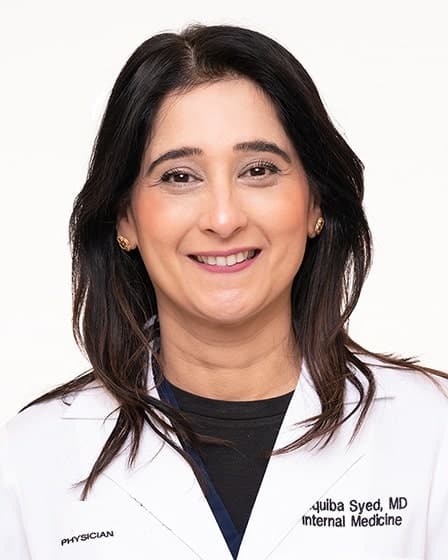
Dr. Saquiba Syed is a board certified internal medicine physician based in Jersey City, New Jersey, affiliated with Jersey City Medical Center and other hospitals in the area. She earned her medical degree from King Edward Medical University and has more than 20 years of clinical experience in primary and hospital care. Dr. Syed reviews this page for medical accuracy.