
Mental health and addiction often travel together, and we help you find your way to sober living that supports both sides of recovery.
Mental health and addiction are closely connected, and lasting recovery usually means caring for both. Many people in recovery also live with conditions like depression, anxiety, or trauma, and treating one without the other can leave the other to undermine recovery. Hopeful Estates does not provide therapy, counseling, or mental health treatment. We help you find your way to sober living that supports mental health recovery, and we help you connect to the professional care that treats it.
Getting the right support in place makes recovery steadier. Call us at 201 292 0185 or reach out through our contact page, and we will help you find your way to the support you need.
Mental health conditions and substance use disorders often occur together, a pattern clinicians call co occurring disorders or dual diagnosis. According to the National Institute of Mental Health, many people who have a substance use disorder also experience a mental health condition, and people living with a mental health condition are at higher risk of developing a substance problem. The two are genuinely interconnected, not simply coincidental.
There are several reasons they overlap. Shared risk factors like stress and trauma can drive both. Some people use substances to cope with the symptoms of an untreated mental health condition, a pattern often called self medicating, which tends to make both worse over time. Substance use can also change the brain in ways that raise the risk of mental health problems. Understanding this connection is the first step toward addressing recovery as a whole rather than one piece at a time.
Recovery lasts longer when mental health and addiction are treated together rather than separately. The National Institute of Mental Health points to integrated care, treatment that addresses a mental health condition and a substance use disorder in a coordinated way, as the recommended approach for co occurring conditions. Treating only the addiction while leaving a mental health condition unaddressed often leaves the very thing driving substance use still in place.
Integrated care can include behavioral therapies, medication where appropriate, and support for the people around a person in recovery. The specifics belong to licensed professionals, not to us. What matters for anyone searching is the principle: both conditions are real, both are treatable, and the strongest recovery comes from caring for them side by side. Stable housing supports that work, which is where relapse prevention and a steady sober environment come in.

Several mental health conditions commonly appear alongside substance use disorders, and recognizing them helps a person seek the right kind of care. The conditions below are among the most frequently seen together with addiction, based on National Institute of Mental Health guidance.
| Condition | How It Often Shows Up in Recovery |
|---|---|
| Depression | Persistent low mood, loss of interest, and low energy that can both drive and follow substance use |
| Anxiety disorders | Ongoing worry, panic, or fear that a person may try to quiet with substances |
| Post-traumatic stress disorder (PTSD) | Trauma symptoms, flashbacks, and hypervigilance that often underlie self medicating |
| Bipolar disorder | Mood swings between highs and lows that can complicate both diagnosis and recovery |
These are not the only conditions that co occur, and only a licensed professional can diagnose them. Naming them here is meant to help a person recognize when addiction may not be the whole picture, and to encourage getting an accurate assessment from someone qualified to give one.
A stable home gives mental health recovery the footing it needs while the real clinical work happens with professionals. Mental health conditions are far harder to manage in chaos, and a substance free place to live takes much of that daily stress off the table. This is not treatment and it is not therapy. It is the ground underneath treatment, the steady base that lets the harder work hold.
What surrounds a person shapes recovery as much as where they sleep. Being among others who understand, through peer and sober support, softens the loneliness that can pull depression and anxiety deeper. The rhythm that comes with life skills support replaces disorder with something a person can rely on. Where addiction has damaged the people closest to someone, family support starts to mend those ties. Steady guidance from mentorship, or the one on one focus of recovery coaching, adds another handhold. The value of a good sober home is how it gathers these around the professional care at the center, rather than standing in for it.

Hopeful Estates helps you find your way to the support that makes recovery possible. We are a referral service, not a treatment provider, so we do not offer therapy, diagnose conditions, or run programs. What we do is listen to your situation and help you find sober living that supports mental health recovery, then help you connect to the professional care that treats it. For someone facing both addiction and a mental health condition, having a stable home and the right care in place is often what turns recovery from a struggle into something that holds. Tell us where you are, and we will help you take the next step toward getting well. You can learn more about sober living with us.
Recovery is steadier when mental health and addiction are supported together. Tell us where you are and we will help you find your way to sober living that supports the whole of your recovery. Call us at 201 292 0185 or send a confidential message, and we will start today.
Co occurring disorders, also called dual diagnosis, means having a mental health condition and a substance use disorder at the same time. The National Institute of Mental Health notes the two often appear together and influence each other, which is why care usually needs to address both.
It can work in both directions. An untreated mental health condition can lead a person to self medicate with substances, and substance use can change the brain in ways that raise the risk of mental health problems. Shared factors like stress and trauma can drive both.
Treating only one often leaves the other to undermine recovery. The National Institute of Mental Health recommends integrated care that addresses a mental health condition and a substance use disorder together, since that coordinated approach tends to hold up better over time.
No. Sober living is not treatment and not therapy. It provides a stable, substance free home that supports mental health recovery alongside the professional care that actually treats the condition.
We are a referral service, so we help you find sober living that supports mental health recovery and help you connect to professional care. We do not provide therapy, diagnose, or run treatment ourselves.
Seek an assessment from a licensed professional who can evaluate both the mental health and the substance use side, since only a qualified provider can diagnose. We can help you find sober living that supports that care while you pursue it.
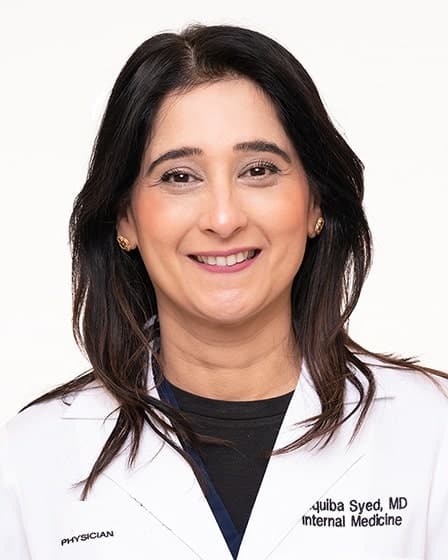
Dr. Saquiba Syed is a board certified internal medicine physician based in Jersey City, New Jersey, affiliated with Jersey City Medical Center and other hospitals in the area. She earned her medical degree from King Edward Medical University and has more than 20 years of clinical experience in primary and hospital care. Dr. Syed reviews this page for medical accuracy.