







When you stop drinking, your brain recalibrates after alcohol’s suppression of key sleep systems, and insomnia is the predictable result. Alcohol once helped you fall asleep, but as it clears, your sleep fragments and lightens. Withdrawal hyperarousal keeps your nervous system “on,” while sweating and shakiness interrupt sleep continuity. Rebound changes in REM and disrupted circadian timing add to the problem. Understanding the timeline and remedies ahead can help you sleep better sooner.
Key Takeaways
- Alcohol initially aids sleep onset, but as it clears, sleep fragments and lightens, disrupting rest.
- Withdrawal triggers hyperarousal, leaving the nervous system “on” and unable to wind down.
- The brain recalibrates after alcohol suppression, causing rebound changes in REM and deep sleep.
- Physical symptoms like sweating and shakiness interrupt sleep continuity with frequent awakenings.
- Disrupted circadian timing destabilizes sleep architecture, producing vivid dreams and lighter, fragmented sleep.
What causes insomnia in early sobriety
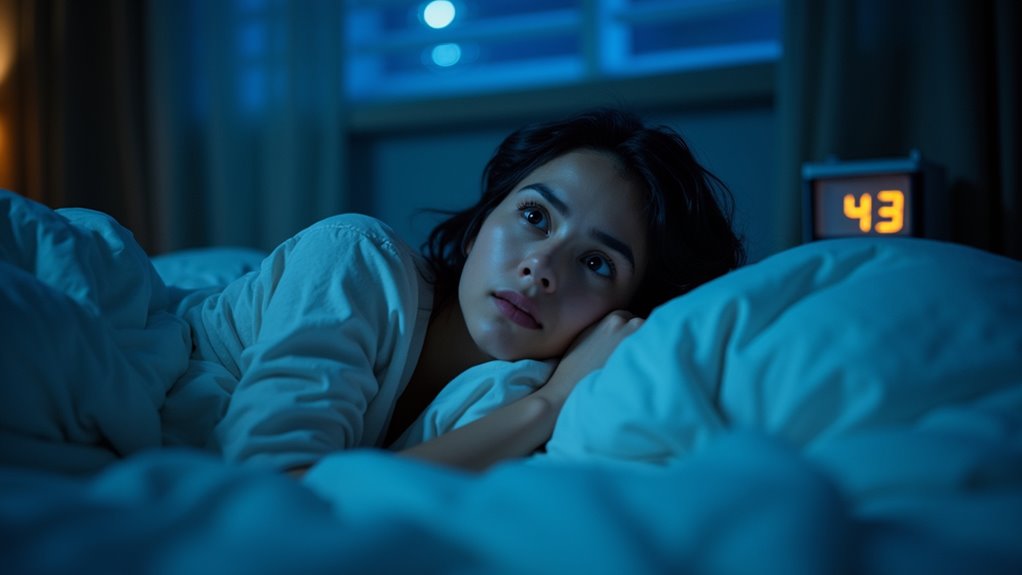
Insomnia in early sobriety is caused by your brain recalibrating the systems alcohol had suppressed, and that adjustment often disrupts sleep. Alcohol initially helps you fall asleep, but as it clears, your sleep fragments and lightens. During withdrawal, your nervous system shifts into a hyperaroused state, leaving you anxious, restless, and alert precisely when you need to wind down. Physical symptoms like sweating and shakiness interrupt sleep continuity, and these problems typically peak within the first one to three days. Your sleep architecture also destabilizes, with rebound changes in REM and disrupted circadian timing. Melatonin signaling becomes less predictable, making consistent rest harder to achieve. Add lifestyle disruptions like caffeine, screens, irregular schedules, and daytime naps, and you’ve created conditions where insomnia becomes an expected, physiologically driven consequence.
How long does insomnia in early sobriety last
Insomnia in early sobriety typically lasts from a few days to one or two months, though timelines vary from person to person. Your sleep is usually worst during the first one to three days after you stop drinking, when withdrawal-related hyperarousal peaks. Within the first six days, you may experience at least one night of disrupted sleep, though many people report improvement after the initial week.
Expect fragmented sleep to continue through weeks two to eight. Your circadian rhythm, REM balance, and nighttime sleep pressure need time to recalibrate. Some cases resolve within one to two months, but timelines differ based on your drinking history and overall health.
If your insomnia becomes persistent or severe, seek clinical attention, especially while withdrawal risk remains active. Consistency accelerates recovery.
How does sleep change during withdrawal and recovery

Sleep changes during withdrawal and recovery in predictable stages as alcohol leaves your system. In the first one to three days, withdrawal hyperarousal keeps your nervous system “on,” making it hard to fall asleep and stay asleep. You’ll likely experience frequent awakenings, sweating, and shakiness that interrupt sleep continuity. Alcohol also alters your sleep architecture, so once it’s removed, you’ll see rebound changes in REM and deep sleep. This often means vivid dreams and lighter, more fragmented sleep. Your circadian rhythm and melatonin signaling may become unstable during early sobriety, making nighttime sleep pressure less predictable. After the first week, sleep usually starts improving, though fragmentation can persist through weeks two to eight. Recovery isn’t instant. Your brain and body need time to recalibrate.
What natural remedies improve sleep in early sobriety
Natural strategies that improve sleep in early sobriety include sleep hygiene, cutting caffeine, avoiding screens and naps, calming routines, exercise, daylight exposure, and consistent meals. Start with sleep hygiene: keep a consistent bedtime and wake time, even on weekends, to stabilize your circadian rhythm. Make your bedroom dark, cool, and quiet, and reserve it for sleep. Cut caffeine after midday, since it prolongs sleep onset and fragments continuity. Avoid late-night screens, which suppress melatonin signaling. Skip daytime naps that reduce nighttime sleep pressure and reinforce insomnia cycles. Establish a calming pre-sleep routine, light stretching, reading, or breathing exercises, to lower withdrawal-related hyperarousal. Get regular exercise and daylight exposure to strengthen circadian timing, but finish workouts several hours before bed. Eat meals on a predictable schedule. If insomnia persists or worsens, seek clinical evaluation promptly.
How do common sleep aids compare for people in recovery
Common sleep aids for people in recovery differ most in their safety and dependence risk, which matter as much as effectiveness. Some options carry cross-dependence concerns during a period when your nervous system is already destabilized, while others address underlying anxiety and sleep timing without reinforcing addictive patterns.
| Sleep Aid | Primary Benefit | Recovery Concern |
|---|---|---|
| Benzodiazepines | Rapid sleep onset | High dependence risk |
| Melatonin | Circadian support | Limited for severe insomnia |
| Trazodone | Sedation, low abuse potential | Next-day grogginess |
Melatonin and trazodone are often preferred because they don’t reinforce dependence. Benzodiazepines, though effective short-term, can complicate abstinence and worsen anxiety once discontinued. You should coordinate any sleep medication with a clinician, especially when withdrawal risk remains active and sleep architecture is still recalibrating.
When should you see a doctor about your insomnia
See a doctor about your insomnia when it persists beyond detox or signals an unresolved problem. If your sleep problems continue past the first several weeks despite a consistent routine, consult a doctor. Persistent or severe insomnia may require clinical attention, especially when withdrawal risk is still active.
Watch for warning signs. Contact a provider if you experience severe anxiety, sweating, shakiness, or restlessness that disrupts sleep continuity during acute withdrawal, since these symptoms can indicate dangerous withdrawal complications.
You should also seek help if daytime functioning declines, cravings intensify, or your mood worsens. Because sleep problems are about five times more common in early recovery, a clinician can rule out underlying conditions and recommend targeted, evidence-based treatment.
Conclusion
Insomnia in early sobriety is one of the most common and frustrating hurdles, and it happens because the brain and body need time to rebalance after months or years of substance use. Disrupted sleep chemistry, anxiety, and shifting routines all make rest harder at first, but for most people sleep steadily improves over the following weeks. Good sleep habits, patience, and support can ease the transition and protect your recovery. If sleepless nights are wearing you down in early sobriety, Hopeful Estates in West Milford, NJ connects you with recovery coaches who offer personalized support to help you rest and stay on track.
Call Today and Get Personalised Recovery Support
Whether you need a sober coach or ongoing support with early recovery challenges, expert connections make every step easier. Through Hopeful Estates serving Ringwood, NJ, we connect you with trusted sober living homes who offer the right Recovery Coaching built around your goals. Call (201) 292-0185 today and begin a healthier chapter in your life.
Frequently Asked Questions
Can Insomnia During Early Sobriety Trigger a Relapse?
Yes, insomnia can trigger a relapse during early sobriety. When you can’t sleep, your nervous system stays in a heightened, hyperaroused state that amplifies anxiety, restlessness, and cravings. Fragmented sleep also weakens your emotional regulation and stress tolerance, making alcohol feel like a quick fix. Since sleep problems are roughly five times more common in early recovery, addressing your insomnia directly protects your sobriety and lowers relapse risk.
Is It Safe to Exercise Late at Night for Better Sleep?
Late-night exercise generally isn’t your best strategy for better sleep. Intense activity too close to bedtime can raise your alertness and body temperature, making it harder to fall asleep, especially when withdrawal already keeps your nervous system “on.” You’ll benefit more from consistent, earlier workouts, which support stable circadian timing. If you must exercise at night, keep it light and finish a few hours before bed to protect your sleep onset.
Does Diet or Nutrition Affect Sleep in Early Recovery?
Yes, diet affects your sleep in early recovery. Your meal timing matters, irregular eating can destabilize your sleep schedule and make insomnia worse. You’ll sleep better when you keep consistent mealtimes and avoid caffeine, especially late in the day. Heavy meals or stimulants near bedtime can delay sleep onset and fragment your night. Stabilizing your nutrition supports the circadian and sleep-pressure recalibration your body’s undergoing after quitting alcohol.
Can Therapy or Counseling Help With Recovery-Related Insomnia?
Yes, therapy can help with recovery-related insomnia. Counseling addresses the anxiety, restlessness, and heightened alertness that keep your nervous system “on” at night. It also helps you rebuild consistent routines, manage cravings, and reduce emotional stress that delays sleep. Since early sobriety often disrupts familiar bedtime habits and sleep timing, structured support guides you toward healthier patterns. If your insomnia’s persistent or severe, seek clinical attention, especially while withdrawal risk remains active.
Do Sleep Problems Differ Between Men and Women in Recovery?
Research on this is limited, but some patterns appear. Both men and women commonly face fragmented sleep, frequent waking, and insomnia in early recovery, especially in the first few days and weeks. Women more often report insomnia and vivid dreams and can be more affected by hormonal shifts, while men may have more sleep-disordered breathing. The differences are modest, though, since insomnia is extremely common for everyone in early withdrawal, affecting somewhere between roughly 36 and 91 percent of people. Good sleep habits, patience, and professional support help regardless of sex.